 VEYLO
VEYLOUnder the chin
Double chin treatments: visualize them on your own face first
Fat-dissolving injections, liposuction, a neck lift and more — try them on a 3D scan of your own face, in sessions, millilitres or degrees, and compare with your original before you book a consultation.
Free · No account needed · iPhone with Face ID
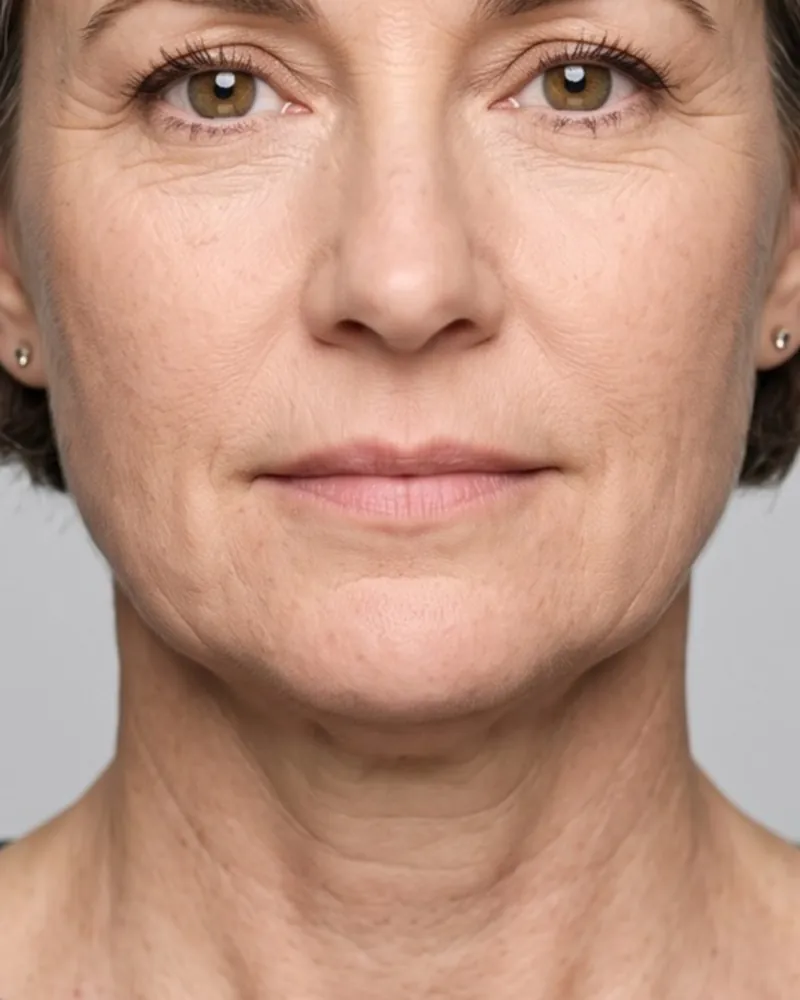
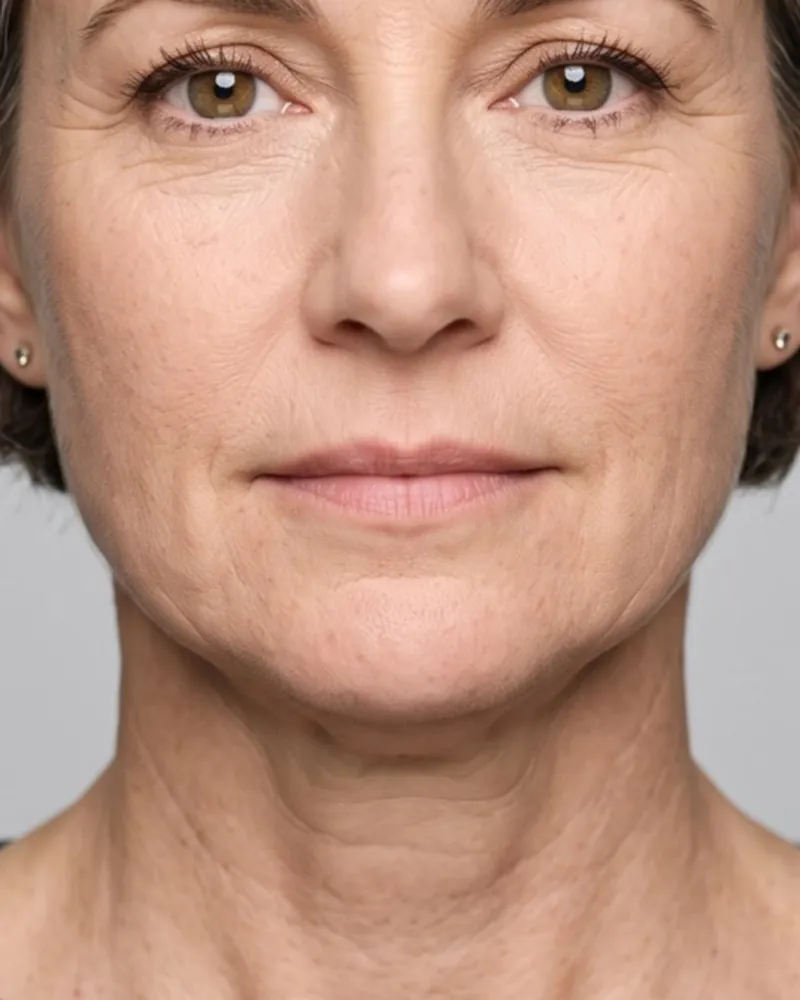
A visualization, not a prediction.
What are the treatments under the chin?
Fullness under the chin (often called a double chin) can be approached in different ways: fat-dissolving injections given as a series of sessions, liposuction through small openings, a surgical neck lift, botulinum toxin in the neck muscle, or non-surgical skin tightening with ultrasound or radio frequency.
They differ a lot — injectable or surgical, one session or several — and which one, if any, suits you depends on what causes the fullness: fat, skin, muscle or bone structure. Only a clinician can assess that.
In Veylo each treatment has its own unit: sessions, millilitres, units or degrees of chin–neck angle. Only the area under the chin and the jaw border change.
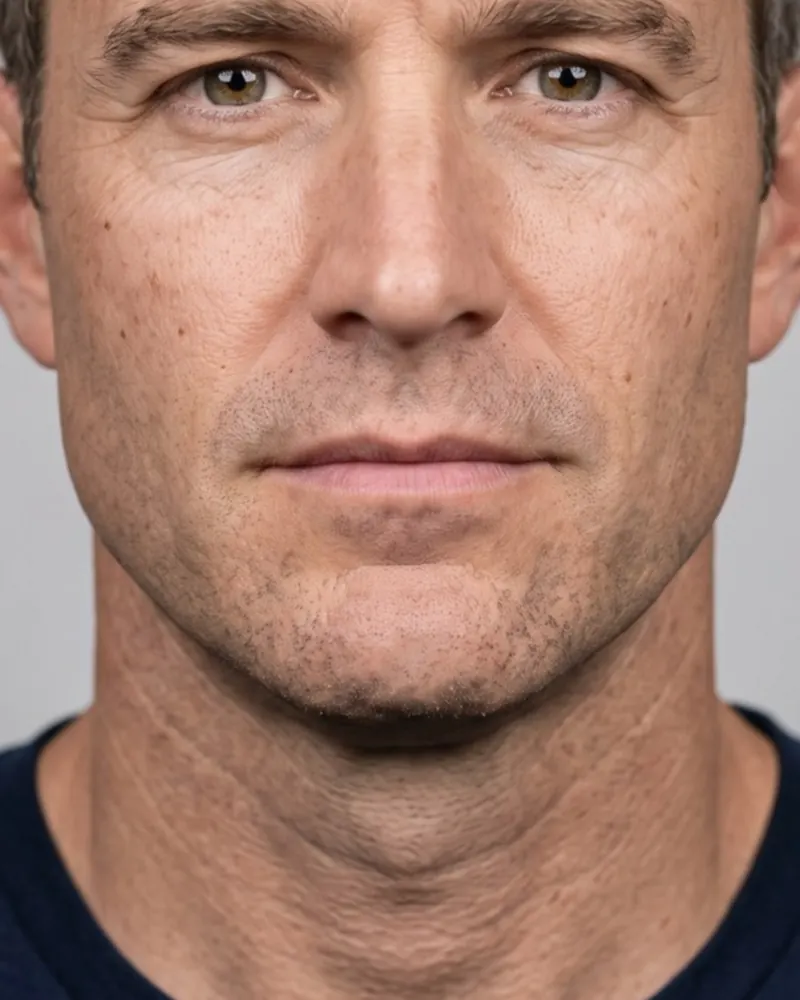
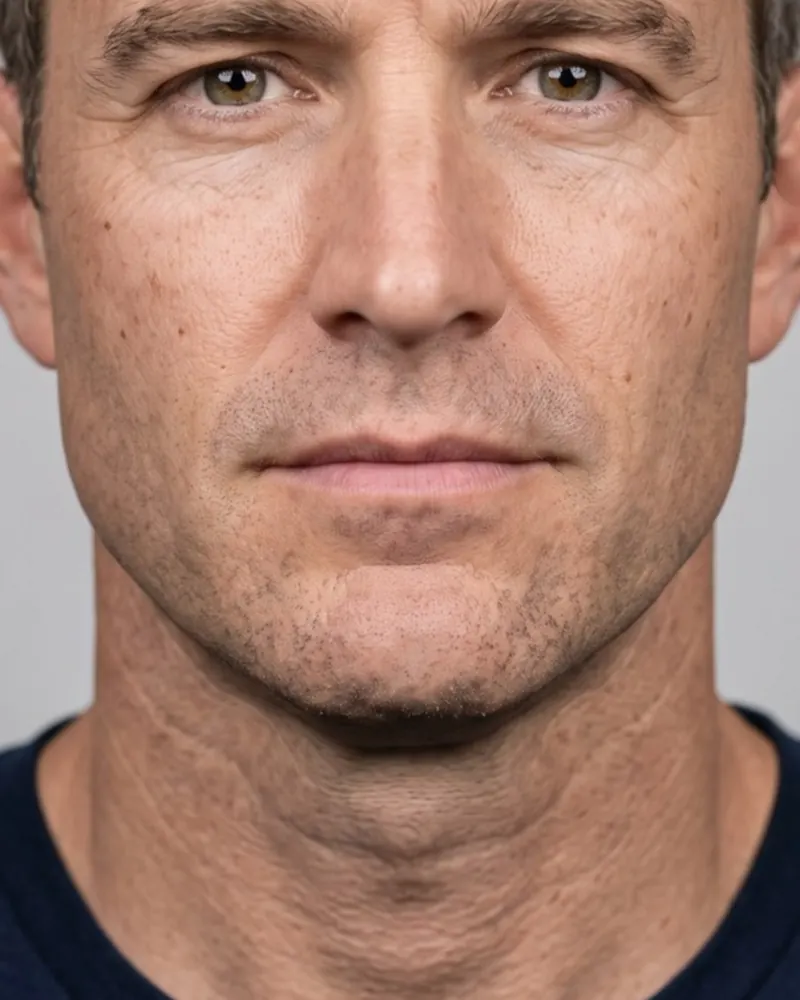
Under-chin treatments on sample faces, original and visualization.
Sample face
Area
Treatment
Amount
Under the chin approx.
+4.8 mm
Fat-dissolving injections · 4 sessions
Typical in published studies: 1–6 sessions
Rendered by the Veylo face engine on AI-generated sample faces — not patients. Millimetres are approximate, on Veylo’s visualization scale. A visualization, not a prediction.
Amounts in real units, with the ranges studies observed.
Move the slider to see how Veylo sets this treatment. The shaded band is what published studies observed — context, never a recommendation.
Seen in studies: 1–6 sessions total
Outside the range seen in published studies. Talk to your clinician about what is appropriate for you.
Approx. change on Veylo’s visualization scale
Source: FDA label for deoxycholic acid injection (DailyMed). The label allows up to 6 sessions, at least 1 month apart.
Slider in the app: 0–6 sessions, in steps of 1
No verified range from studies, so no band is shown.
Outside the range seen in published studies. Talk to your clinician about what is appropriate for you.
Approx. change on Veylo’s visualization scale
Source: Cohort study of isolated under-chin liposuction, Aesthetic Plastic Surgery. Median 19 ml removed in 63 patients. The study did not publish a range, so the app shows no typical band here.
Slider in the app: 0–100 ml, in steps of 5
Seen in studies: 17–29 ° total
Outside the range seen in published studies. Talk to your clinician about what is appropriate for you.
Approx. change on Veylo’s visualization scale
Source: Retrospective neck-lift study, American Journal of Cosmetic Surgery. Average change of the chin–neck angle: about 17° with a conventional neck lift and about 29° with an added hyoid suspension.
Slider in the app: 0–35 °, in steps of 1
Seen in studies: 26–36 U total
Outside the range seen in published studies. Talk to your clinician about what is appropriate for you.
No measurement for this one — compare the images instead.
Source: Phase 3 trial of onabotulinumtoxinA for platysma bands, JAAD. The 2024 FDA label uses 26, 31 or 36 units in total. Units of onabotulinumtoxinA; other toxins use different units.
Slider in the app: 0–60 U, in steps of 1
Seen in studies: 1–3 sessions total
Outside the range seen in published studies. Talk to your clinician about what is appropriate for you.
Approx. change on Veylo’s visualization scale
Source: Systematic review of microfocused ultrasound, IJERPH. Covers microfocused ultrasound and radio-frequency microneedling; studies describe subtle firming rather than a surgical-looking lift.
Slider in the app: 0–3 sessions, in steps of 1
Ranges show what published studies observed. They are not a recommendation; your clinician decides what is appropriate.
What Veylo shows
- Each under-chin treatment in its own unit: sessions, ml, U or degrees
- Original and visualization side by side, front and 3D
- An approximate under-chin change on Veylo’s scale
- Combinations, for example with jawline or chin treatments
What only a clinician can tell you
- What causes the fullness under your chin — fat, skin, muscle or bone
- Which approach, if any, is suitable for you
- How many sessions or how much would be appropriate
- Risks, side effects, recovery and how your skin may respond
How it works, in 3 steps.
- 1
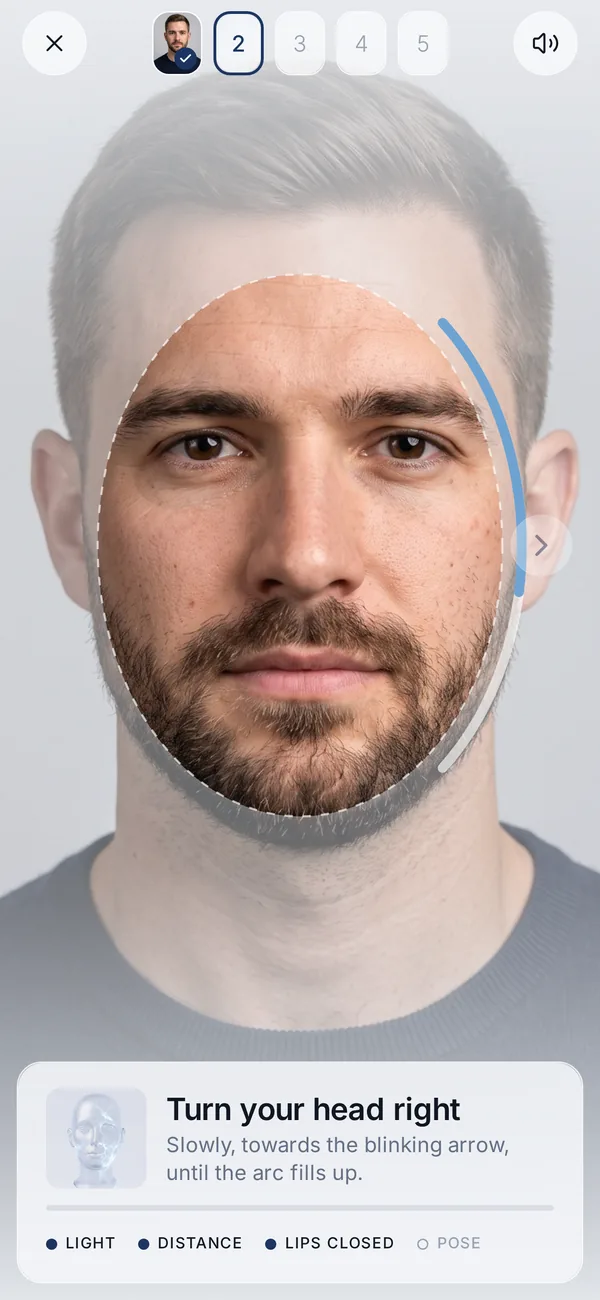
Scan your face
Five guided angles with the iPhone’s TrueDepth camera, about 40 seconds. Your face data stays on your iPhone.
- 2
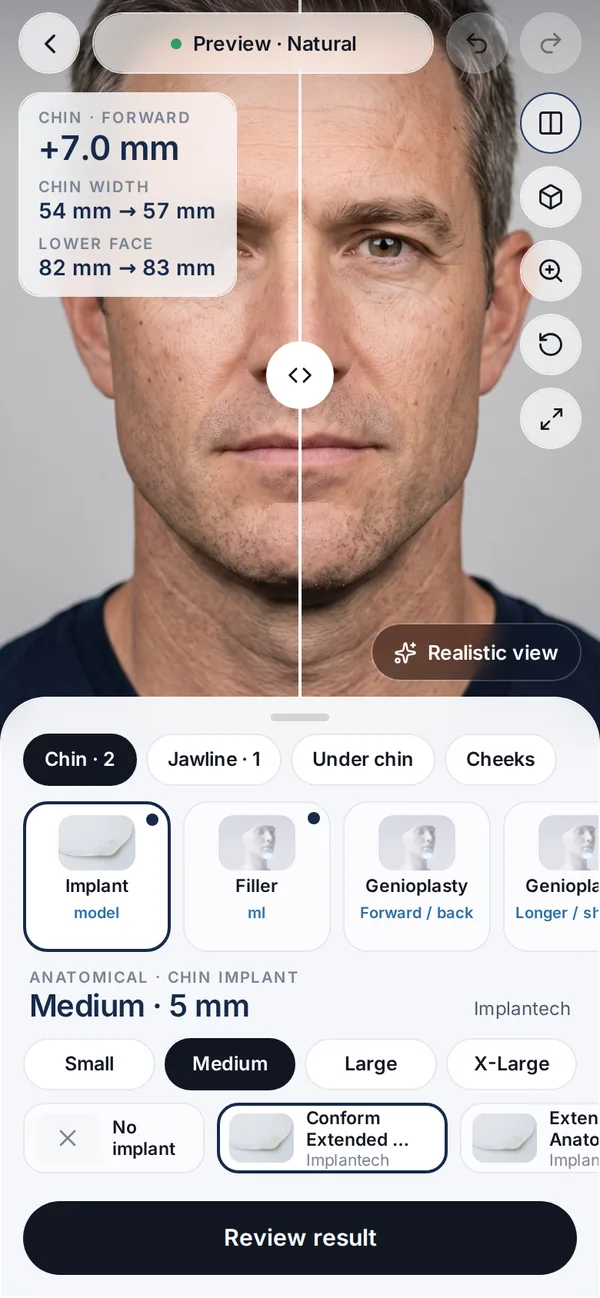
Set the treatment and the amount
In ml, mm, units or implant model and size. Only the area you choose changes.
- 3
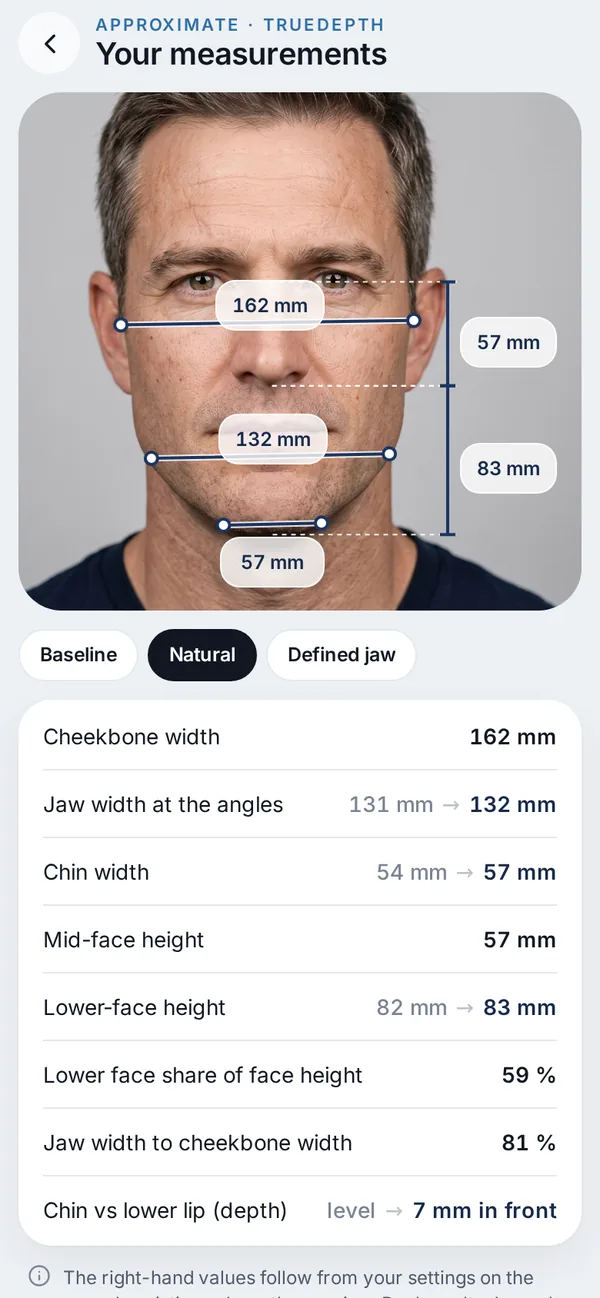
Compare, then talk to a clinician
Original and visualization side by side, with approximate millimetres — and an optional private link for your clinic.
Questions about double chin treatments
Which double chin treatment is right for me?
Veylo cannot tell you that, and it does not recommend treatments. It lets you visualize several options on your own scan so you can ask a clinician about them. The right approach depends on an examination.
How many fat-dissolving injection sessions are usual?
As context, the FDA label for deoxycholic acid allows up to 6 sessions at least a month apart. How many, if any, would be appropriate for you is decided by your clinician.
Does Veylo show my result after liposuction or a neck lift?
No. It shows an appearance visualization from your scan. It cannot predict healing, skin retraction, swelling or the surgical outcome.
What does the neck-lift slider measure?
How much sharper the angle between the under-chin and the neck becomes, in degrees. In one study the average change was about 17° with a conventional neck lift and about 29° with an added technique.
Can I combine under-chin and jawline treatments?
In the app, yes — several treatments can be visualized together and compared with your original. Whether a combination makes sense for you is a clinical question.

Try treatments
before you book.
Free on iPhone with Face ID. No account needed to scan and edit.
Not ready for the beta? Get an email when Veylo launches.
A visualization, not a prediction.
Related treatments you can try in Veylo.
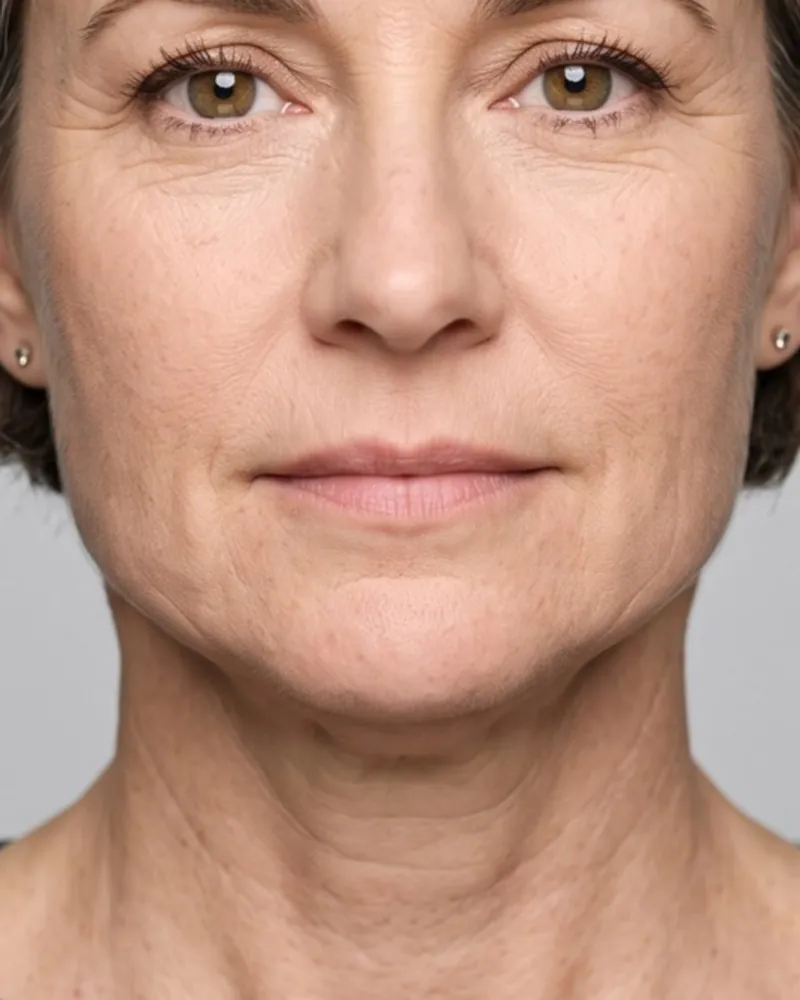 JawlineJawline fillerFiller along the jaw in ml, measured as jaw width.Read more
 ChinChin fillerHyaluronic acid filler in ml, with the chin-only preview.Read more
 CheeksCheek filler & buccal fatCheek filler, buccal fat removal and cheek implants.Read more
 For clinicsVeylo for clinicsFor aesthetic clinicsRead more